About
Life
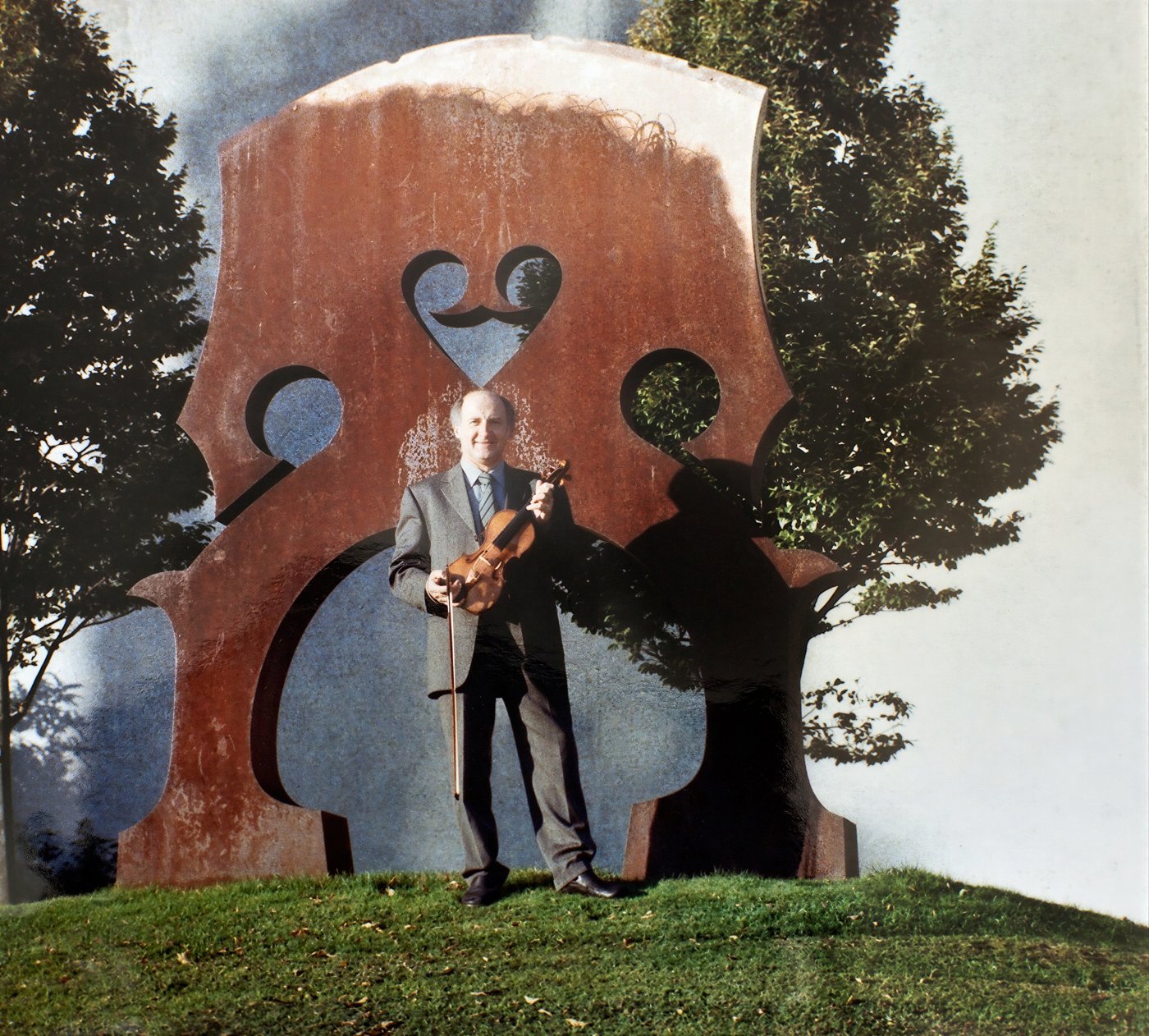
“Even the smallest note must sing, and the music must breathe.” Boris Kuschnir remembers his father’s words decades later. Born in Kyiv in 1948, he grows up with two violinist parents. His father, first concertmaster of the Kyiv Radio Symphony Orchestra, gives him his first lessons. His mother listens critically to his playing. Sound and attentive listening are among his earliest musical experiences.
At the Moscow Tchaikovsky Conservatory, Boris Belenki becomes his teacher. He subsequently develops his chamber music skills at the Gnessin Institute in Moscow with the Borodin Quartet’s cellist Valentin Berlinsky. Kuschnir meets David Oistrakh and Dmitri Shostakovich; with the Moscow String Quartet, founded in 1970, he works on Shostakovich’s Thirteenth Quartet at the composer’s home. These experiences later inform his teaching: understanding a score, balancing the voices and taking musical details seriously.
In 1969 Kuschnir is a prizewinner at the All-Union Competition in Leningrad. In the final he plays Beethoven’s Violin Concerto with the Leningrad Symphony Orchestra under Yuri Temirkanov. His solo career begins, while the quartet remains central to his work. In 1981 he leaves the Soviet Union and moves to Austria. His Moscow years are followed by a concertmaster position with the Bruckner Orchestra Linz and teaching in Linz and Vienna.
In Austria he hears an eight-year-old violinist: Julian Rachlin. Recognising his exceptional talent, Kuschnir takes him on as a student. In a later conversation with Nikolaj Znaider, he describes this encounter as decisive for his teaching career. In 1988 Rachlin wins the Eurovision competition in Amsterdam. Nikolaj Znaider, Lidia Baich, Dalibor Karvay and María Dueñas are also among the students whose international careers Kuschnir has accompanied as a teacher.
He has taught at what is now the Music and Arts University of the City of Vienna since 1984; in 1999 he is appointed full professor in Graz. Alongside this work he founds the Vienna Schubert Trio and the Vienna Brahms Trio, and later co-founds the Kopelman Quartet. Concerts take him to Vienna’s Musikverein, Carnegie Hall and London’s Wigmore Hall. Performing and teaching remain connected: he wants his own playing to demonstrate what he asks of his students.
When Kuschnir speaks about great violinists, he returns to sound — the ability to sing through an instrument and make emotions audible. The idea his father passed on continues to occupy him as both a musician and a teacher.